
Gary Cheung · Published 4 June 2025 · 4 min read
At a glance
- The risk: AI may improve task speed while changing employee data flows, control quality, or the basis of workforce decisions.
- The governance implication: Productivity claims do not assign accountability. Leaders must define which tasks AI may influence, what evidence is acceptable, and who can challenge or stop the workflow.
- The leadership takeaway: Measure outcomes and control effects at the workflow level before scaling AI or making workforce decisions from its outputs.
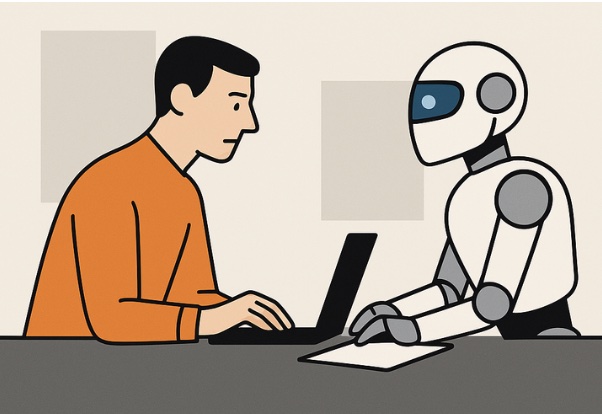
When leaders introduce AI into workplace processes, they make more than a technology decision. They decide which tasks may be automated or assisted, what employee or customer information enters the system, and how much authority people retain over the resulting work.
The useful question is not simply whether AI will boost productivity or replace jobs. It is whether the organization can show what changed in the workflow, who owns the consequences, and when a person can challenge or stop the process.
Productivity Must Be Measured at the Workflow Level
A faster draft, summary, or classification is not by itself a business outcome. Leaders need to know whether the tool reduces total handling time, improves accuracy, creates review work elsewhere, or weakens a control that depended on a person noticing an exception.
For example, an AI assistant may prepare a first draft for an analyst. If the analyst must verify every statement and correct source errors, the time saved at drafting may reappear in review. If the draft informs a customer, credit, fraud, or compliance decision, the cost of a plausible but unsupported output may exceed the minutes saved.
This is an illustrative scenario, not a claim about a particular company. Measure the end-to-end process: quality, rework, exceptions, customer or employee impact, and control performance—not just output volume.
Exposure Is Not a Job-Loss Forecast
The International Labour Organization’s 20 May 2025 update estimates that one in four workers globally is in an occupation with some degree of potential generative AI exposure. The ILO says transformation of jobs is more likely than outright redundancy because most occupations include tasks that still require human input. Exposure measures potential task impact; it does not predict that a quarter of jobs will disappear or that a specific employer will reduce headcount.
For leaders, task-level analysis is more useful than broad predictions. Which steps can AI assist? Which require judgment, relationship context, or accountable approval? If a role changes, what new review duties, skills, or workload move to the employee—and how will the organization check that the change is working as intended?
Workforce choices should follow evidence from the actual process. A general exposure estimate is not an organization-specific staffing plan.
Workplace AI Changes Information and Control Risks
AI use can change where work information travels. Prompts, uploaded documents, connected applications, generated summaries, and retained logs may involve customer, employee, confidential, or regulated data. The exposure depends on approved product configuration, access rights, retention terms, integrations, and the task being performed.
The review should also ask what control work is displaced or introduced. If an AI tool prepares a case summary, specify who validates it against source records, how corrections are captured, and whether the output can affect a decision or record without review. Fluent output is not automatically authoritative.
NIST’s AI Risk Management Framework is voluntary guidance for managing AI risks across design, development, use, and evaluation. It can help organize review, but does not replace the organization’s own approval, security, privacy, employment, or sector obligations.
Employment Decisions Need Clear Ownership
The EU AI Act identifies certain AI systems used for recruitment, selection, employment decisions, task allocation, and monitoring or evaluation of workers as high-risk, subject to the Regulation’s scope and exceptions. This is a jurisdiction-specific legal classification, not a universal rule for every workplace tool.
Even where a system is advisory, leaders should define who owns the decision and what meaningful review requires. A supervisor who can only accept a score without time, evidence, or authority to question it is not providing effective challenge. Name the decision owner, record the AI’s role, create a route to correct inaccurate information, and empower someone to pause use when results or controls fall outside approved limits.
Set this responsibility before deployment and revisit it when the model, data, users, connected systems, or purpose changes. Approval of a product does not automatically approve every workflow built around it.
Questions Leaders Should Be Able to Answer
- Which workplace tasks may this AI system perform or influence, and what evidence shows the full process is better?
- What employee, customer, or confidential information enters the workflow, where can it flow, and who verifies outputs before they affect a consequential decision?
- Who owns the outcome, who can challenge the system, and who can pause or stop it when quality, fairness, security, or control thresholds are breached?
Closing Thought
AI can change work before an organization decides how it wants work to change. Leaders should make that choice deliberately, measure the full workflow, and keep accountability with people who have authority to act.
Sources and Further Reading
- International Labour Organization, Generative AI and jobs: A 2025 update (20 May 2025) — potential task exposure, not a forecast of job losses.
- NIST AI Risk Management Framework — voluntary AI risk guidance.
- Regulation (EU) 2024/1689, Artificial Intelligence Act — employment and worker-management use cases, subject to scope and exceptions.
- Shadow AI vs. Sanctioned AI: Where’s the Line?
- AI Bias in Risk Management: A Governance Guide
About Gary: Gary Cheung writes about AI governance, information risk, and application security, focusing on the business decisions AI changes and the accountability they require. Contact Gary to discuss a consequential AI decision.


