Introduction: The Biggest Misunderstanding in AI Right Now
Everywhere you look, companies are rolling out “AI guardrails.”
Content filters. Prompt limits. Automated restrictions.
Rules that tell the AI what not to do.
These are helpful — but here’s the uncomfortable truth:
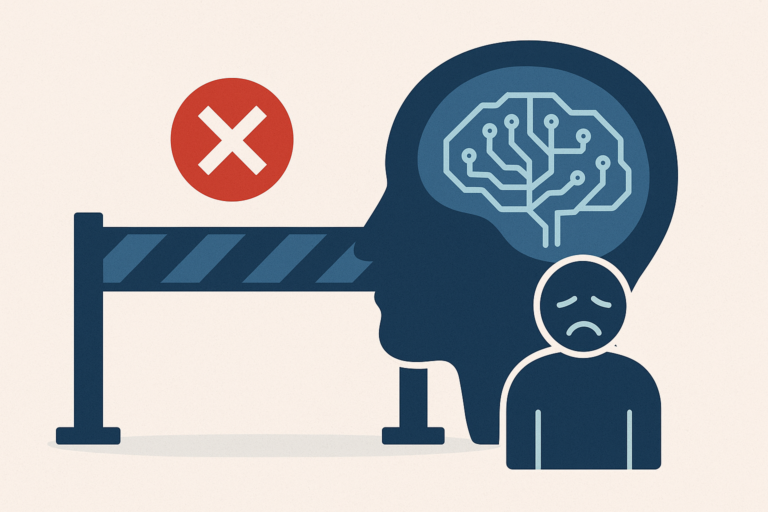
Guardrails do not equal governance.
And confusing the two is why so many AI deployments fail before they even scale.
Guardrails restrict behavior.
Governance creates accountability.
If you want AI systems that are safe, aligned, and operationally reliable, you need both — but most organizations only invest in one.
This article breaks down the difference and explains what real AI governance looks like in practice.
1. What AI Guardrails Actually Do (And What They Don’t)
Guardrails = automated limits designed to prevent bad behavior.
They’re technical controls.
Common examples:
Hard-coded prompt filters
Blocked topics
Safety constraints
“Do not answer…” rules
Pre-built vendor safeguards
Automatic refusal responses
Rate limits and usage caps
Guardrails help with misuse prevention, but they have three major weaknesses:
Weakness 1 — They are reactive, not strategic.
A guardrail activates only after a risky scenario is triggered.
Weakness 2 — They don’t address organizational accountability.
Nobody becomes accountable because a model said “I can’t answer that.”
Weakness 3 — They fail when contextual judgment is required.
A guardrail can block an unsafe prompt,
but it cannot decide:
Should we even deploy this model?
What data should it never see?
Who is responsible if something goes wrong?
What monitoring is required after launch?
Guardrails keep the model in bounds.
They do not ensure the organization is in control.
2. What AI Governance Actually Means
Governance = the decisions, accountability, oversight, and processes that guide AI from idea → deployment → operation → retirement.
Governance answers the questions guardrails cannot:
1 — Who owns this AI system?
A model without an owner is a model without accountability.
2 — Who approves what data it uses?
Classic IRM issue: unauthorized data flows = silent risk amplification.
3 — How do we evaluate risk before deployment?
Guardrails don’t run risk assessments. Humans do.
4 — How do we monitor the model after it goes live?
Drift, bias, hallucinations, forgotten guardrail updates —
none of these are managed by guardrails alone.
5 — What are the escalation paths if something goes wrong?
No amount of guardrails replaces an escalation playbook.
6 — What documentation must exist?
Model cards, decision logs, lineage, testing evidence.
This is governance — not guardrails.
3. The Real Problem: Companies Are Outsourcing Governance to Vendors
Most organizations rely on “built-in safety features” from:
LLM providers
Cloud platforms
AI tool vendors
Automation systems
Chat interfaces
But vendor safety ≠ organizational governance.
Vendor guardrails protect their platform.
Governance protects your business.
This is where companies run into trouble.
Organizations assume:
“If OpenAI/Google/Azure/Anthropic has safety features, we’re covered.”
This creates blind spots around:
Data leakage
Model misuse
Biased outcomes
Incorrect outputs
Shadow AI
Internal bypassing
Unmonitored drift
Lack of audit trails
Guardrails can reduce harm.
Only governance can prevent systemic failure.
4. A Simple Mental Model: Guardrails vs Governance
| Topic | Guardrails | Governance |
|---|---|---|
| Purpose | Prevent misuse | Ensure accountability |
| Owner | Engineers / Vendors | Leadership / Risk / Product |
| Scope | Model-level | Organization-wide |
| Focus | What AI must not do | What humans must do |
| Timing | Real-time | Throughout lifecycle |
| Strength | Automated | Strategic + operational |
| Weakness | Cannot manage context | Cannot block in real time |
The two must work together — but they are not interchangeable.
5. What Real Governance Looks Like (A Practical, Lightweight Framework)
You don’t need a giant program.
You need a consistent model for how decisions are made.
Here’s a simple framework you can use:
1. Purpose Alignment
Define the business purpose, risk level, and intended use.
2. Data Controls
Data minimization
Approved training/validation datasets
Policy for sensitive information
3. Model-Level Controls
Guardrails
Testing
Validation
Red-teaming
4. Oversight & Monitoring
Human-in-the-loop checkpoints
Drift indicators
Performance thresholds
Weekly/monthly review routines
5. Escalation & Incident Response
Clear triggers
Roles & responsibilities
Impact assessment
Containment steps
Communication path
6. Documentation & Auditability
Decision log
Model card
Data map
Testing results
Control evidence
This is what governance is.
Notice how guardrails are just one component.
6. Final Takeaway: Guardrails Keep AI Safe. Governance Keeps It Accountable.
Guardrails alone can’t prevent:
Biased recommendations
Wrong outputs
Regulatory gaps
Accountability failures
Lack of audit trails
Shadow AI growth
Misaligned business use
Post-deployment drift
Without governance, AI becomes a black box.
With governance, AI becomes a managed system.
If you want AI that is safe, trusted, and scalable, you need both — but governance always comes first.